
Transitional Kindergarten (TK) is the first year in a two-year kindergarten program. Designed especially for four-year-olds, it will help prepare children to succeed in school, while also giving them an opportunity to meet new friends and provide care while parents work. TK is offered through the public school system. Classes take place at neighborhood elementary schools and are free to all students regardless of income, like kindergarten. To learn about TK opportunities, contact your local school district.

Universal PreKindergarten (UPK) for Parents
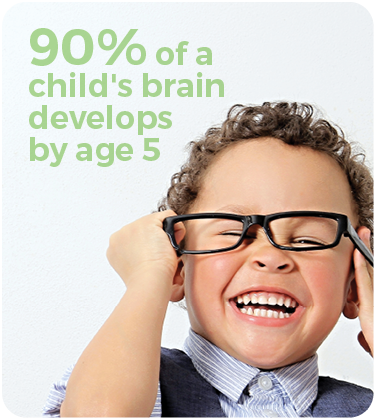
From birth through age 5, your child is rapidly developing and learning from the world around them.
Give your child a strong start by enrolling them in one (or more!) of the many early education and child care options available based on your child’s age:
Early Education and Child Care Options
For Ages 0-3
- Early Head Start / Head Start
- State-Funded Preschool
- Alternative Payment Program
- Licensed Center or Home
- Family, Friend, or Neighbor Caregiver
For Ages 4-5*
- Head Start
- State-Funded Preschool
- Transitional Kindergarten (TK), provided through the local school district
- Alternative Payment Program
- Licensed Center or Home
- Family, Friend, or Neighbor Caregiver
*children not yet Kindergarten age eligible
- Early Care and Education Subsidized Program - Some families may be eligible for cost-assisted (subsidized) child care based on gross (before taxes) income and family size.
- Quality Start Riverside County - All children deserve a quality start. Quality Start Riverside County is helping make that possible by supporting excellence in early learning.
- California State Preschool Program Listing - This state-funded program offers full-day or part-day developmentally appropriate preschool instruction for eligible three- and four-year-old children.
- Find your school district using our interactive map!
There are free and low-cost Prekindergarten spots available in your community!
Find a Prekindergarten program near you.
Frequently Asked Questions about Transitional Kindergarten (TK)
When can my child enroll in TK?
Currently, children in California can enroll in kindergarten if they turn 5 on or before September 1st. Younger children born after that date will be eligible to enroll in TK. Enrollment eligibility will increase over a four-year period. The eligibility schedule is:
- 2022-23: Kids who turn 5 between September 2nd and February 2nd can enroll
- 2023-24: Kids who turn 5 between September 2nd and April 2nd can enroll
- 2024-25: Kids who turn 5 between September 2nd and June 2nd can enroll
- 2025-26: All kids who turn 4 by September 1st
How do I enroll my child in TK?
For information on how to enroll your child in TK, contact your local school or district office. You can find a list of local schools and your school district by using the California Department of Education’s California School Directory.
No, like Kindergarten, TK is optional in California. Parents may choose to enroll their child if they think the program will benefit their child and family. Families who are involved in other state-funded preschool or child care programs, such as Head Start, California State Preschool Program (CSPP), and child care voucher recipients, will be able to choose if they wish to send their child to TK or keep their child in another subsidized program.
Are school districts required to offer TK?
Yes, with some exceptions. All districts that receive state funding are required to offer TK. However, districts are not required to offer TK at every elementary school in their district. This means that the TK program in your district may not be at the elementary school that is closest to your home.
There are some districts in California, known as “basic aid districts,” that are not required to offer TK. The reason for this is that basic aid districts are funded solely through local rather than state funds and are not required to abide by the state mandate to provide TK. Most basic aid districts do offer TK, but some have chosen not to offer this service in favor of other spending. You can find a list of “basic aid” districts here.
How many children are in a TK class?
Starting in 2022, TK classes will have a maximum size of 24 children with two adults, for a 12:1 adult to child ratio. This ratio may be reduced further to 10:1 in 2023, if funding permits.
What qualifications do TK teachers have?
TK teachers are highly prepared to help our youngest learners succeed! All TK classes must be staffed by at least one teacher who has both a multi subject teaching credential (required for elementary school teaching) along with a specialized teaching credential in early childhood education.
Like Kindergarten, schools can choose to offer TK as a half-day (3 hour) program or as a full-day (6 hour) program. Contact your local school to learn about how TK is being offered in your district!
TK is based on a developmentally appropriate, play-based curriculum that allows children to be active and have fun while learning important skills for reading, writing, mathematics, and social-emotional skills such as learning to listen to directions and take turns. TK classrooms follow the guidance provided in the California Preschool Learning Foundations, which will be updated to reflect the addition of younger children to TK over the next several years. You can check out our Teachers page to get an idea of what teachers do in a typical TK class.
Early Learning and Care
Early learning and care has a unique role in providing UPK because they serve children from birth to preschool or school entry, as well as extended care to support school-age children with before- and after-school care, vacation schedules, and evening/weekend care.
Early learning and care programs include:
- General Child Care: Center-Based
- Early Head Start and Head Start
- California Alternative Payment Program
- Community-based early learning and care programs (licensed child care centers)
- Family child care providers (licensed)
- Family, friend, and neighbor care
Full implementation of UPK will also include partnerships with extended learning and care programs to create the continuum of programs and services (early learning and care options and expanded learning options) available in addition to the regular school day and school year.
For more information on UPK services, please contact the RCOE UPK team at upk@rcoe.us.
 Things to Consider When Making Your Choice
- What is available for my child?
- What options are best for me and my child?
 Need Assistance Paying?
If you are needing assistance in paying for child care or to research other options, please call 800-442-4927.
Want More Information About Your Options?
Contact Riverside County Office of Education, Resource & Referral, at 800-442-4927 or by email at randr@rcoe.us.
Content adopted from Tulare County Office of Education
